
At a Glance: Fast Facts for Recovery
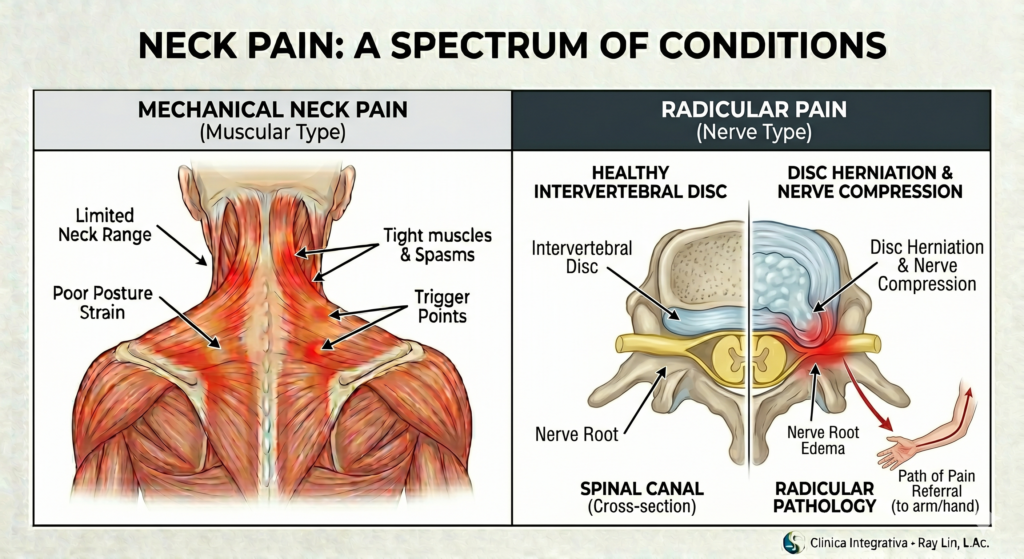
- The Issue: “Neck pain” exists on a wide spectrum—ranging from a simple, acute muscle strain to complex structural issues involving cervical disc degeneration or pinched nerves (radiculopathy) that standard stretching simply cannot fix.
- Our Solution: We utilize precise orthopedic assessments and, when available, integrate your medical imaging (MRI/CT) directly into our treatment planning. We then use targeted, anatomy-based acupuncture in combination with classic clinical techniques to release defensive muscle spasms, calm the broader nervous system, and reduce localized nerve inflammation. For complex cases, we actively co-manage your care alongside your existing specialists.
- The Goal: To structurally resolve tension—whether it is a simple muscular ache or a complex cervical spine condition—restoring your range of motion and eliminating radiating pain or numbness. Whether you are already working with a physical therapist, chiropractor, or specialist, we strategically integrate our care with theirs. Together, we create the optimal physiological environment for your neck to heal naturally, without relying on temporary fixes.
- Expected Timeline: Acute, simple muscular pain often responds within 2-4 sessions. Chronic nerve impingement (radiculopathy) requires a structured, multi-week clinical pathway. A personalized timeline will be established during your initial clinical evaluation and consultation.
A Clinical Note from Ruixun (Ray) Lin, L.Ac., EAMP “Many of my patients come in seeking relief for simple muscle tension, but they are often surprised to learn that clinical acupuncture is also highly effective at managing complex radiculopathy (pinched nerves). During my medical residency at a top-tier hospital in Shanghai, I saw firsthand how targeted, anatomy-based acupuncture is utilized as a primary, first-line treatment for these exact cervical conditions. Whether you are seeking a standalone conservative therapy or looking to integrate acupuncture alongside your current medical specialists, our goal is to structurally reduce the nerve inflammation without relying on invasive procedures. It is a powerful, evidence-based tool that every patient should explore.” —
Clinical Analysis & Treatment (In-depth read)
Whether you woke up with a severely stiff neck or you have been battling radiating arm pain from a cervical disc herniation, persistent neck pain disrupts every aspect of your life.
At our clinic, we do not view “neck pain” as a single diagnosis. We approach your cervical spine through the lens of modern orthopedic science and neuro-anatomy. By identifying exactly which tissues, nerves, or blood vessels are compromised, we provide highly targeted, evidence-based relief.
Understanding Your Symptoms: Which Profile Fits You?
1. Mechanical Neck Pain (Cervical Type)
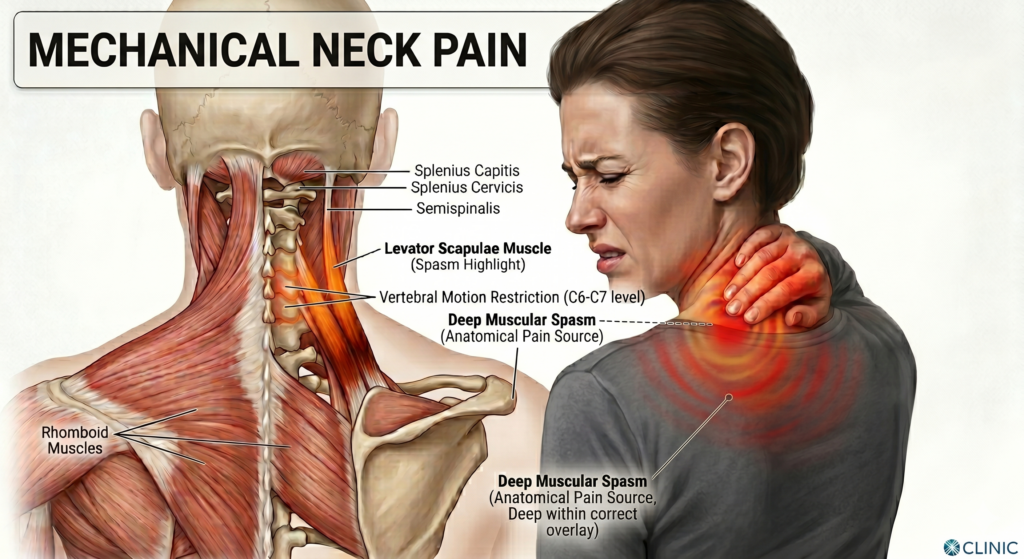
- The Signs: A stiff neck, severe muscle spasms, and a restricted ability to turn your head (often requiring you to turn your whole body to look over your shoulder).
- The Reality: This is primarily a soft-tissue issue involving acute or chronic strain to the cervical muscles, ligaments, and joint capsules.
- Our Clinical Approach (Releasing Defensive Spasms): Acute or chronic neck issues and poor posture cause surrounding muscles to lock up in a protective spasm. We use targeted acupuncture to force these motor points to release muscle tension, instantly removing mechanical stress from the spine and restoring your natural range of motion.
2. Radiating Pain & Numbness (Nerve Root / Radicular Type)
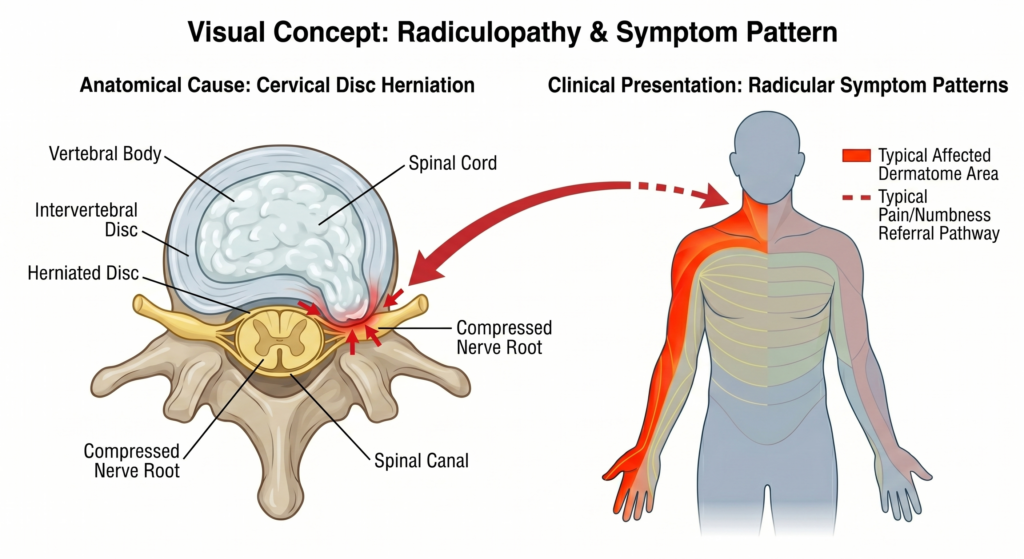
- The Signs: Sharp, shooting, or burning pain that may travel down your shoulder, arm, or into your fingers. You may also experience a weak grip or a “pins and needles” sensation.
- The Reality: A bulging disc, herniation, bone spur, or degenerative change is directly compressing a cervical nerve root (such as C5 or C6) as it exits the spine.
- Our Clinical Approach (Reducing Nerve Root Edema & Supporting Natural Recovery): Depending on the type of disc herniation, the body actually has a remarkable capacity to heal over time. Acupuncture acts as a catalyst for this process. By targeting specific neuro-anatomical points, we regulate local micro-circulation to decrease the swelling around the pinched nerve and accelerate the body’s natural tissue repair. Additionally, we use targeted needling to release the intense “muscle guarding”—the painful secondary spasms that occur when your neck tries to protect the injured disc. By structurally relieving this tension and stimulating the compromised nerve, we effectively reduce neuropathic symptoms like numbness and tingling, helping to preserve nerve function while the compression resolves.
3. Advanced Cervical Compression & Perioperative Care (Stable Cases)
- The Signs: Chronic, severe radiating pain, persistent numbness, or a history of significant disc degeneration. (Please note: We manage patients who are neurologically stable. If you are currently experiencing emergency “red flag” symptoms—such as sudden foot drop, suddenly dropping objects from your hands, or a rapid loss of balance—you must seek an immediate emergency medical or orthopedic evaluation.)
- The Reality: You may have an MRI showing severe spinal stenosis or stable compression, but you do not have acute, progressive motor loss. You might be trying to delay surgery, managing your condition conservatively under the guidance of your specialist, currently waiting for an appointment, or seeking post-operative recovery support.
- Our Clinical Approach (Neuromuscular Stimulation & Co-Management): For severe but stable compression, our clinic plays a crucial supportive role alongside your medical specialists. Often, severe nerve pain prevents patients from participating in Physical Therapy (PT), which can lead to rapid muscle atrophy and degraded nerve signaling. Clinical acupuncture hits a critical “sweet spot” here. It safely manages your pain while providing continuous, targeted stimulation to the compromised nerves and muscles without aggravating the spine. This helps prevent atrophy, keeps the neuromuscular pathways active, and optimizes your body for both surgical preparation and post-operative recovery.
4. Neck Pain with Headaches & Dizziness (Cervicogenic & Sympathetic Type)
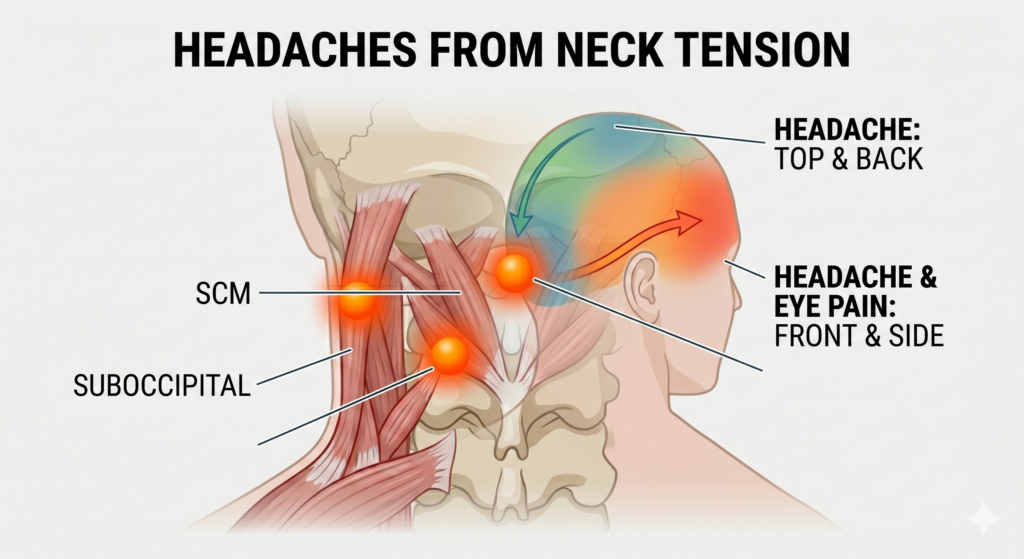
- The Signs: Your neck stiffness triggers tension headaches at the base of the skull, radiating pain behind the eyes, dizzy spells, or feeling off-balance when turning your head.
- The Reality: Mechanical joint dysfunction or chronic muscle spasms in the upper cervical spine are referring pain directly into your head (cervicogenic headache) or irritating local nerves and vascular pathways.
- Our Clinical Approach (Resolving the Kinetic Chain): The muscles in your upper neck do not operate in isolation; they are connected in a complex kinetic chain. When cervical dysfunction occurs, it creates a constant “tug-of-war” between multiple muscle groups, generating intense mechanical tension that pulls directly on the base of your skull. By using targeted acupuncture to release this entire chain of muscles simultaneously, we effectively stop the tug-of-war. For patients who have spent months or years frustrated by “unexplained” (idiopathic) dizziness, brain fog, or chronic tension headaches, finally addressing this physical cervical root cause often produces profound, breakthrough results.
Our Clinical Approach: An Evidence-Based Treatment Pathway
We do not believe in endless treatments without measurable progress. Whether you come to our clinic with a prior MRI diagnosis or just woke up with a stiff neck, we meet you exactly where you are. We follow a strict, results-driven standard of care, constantly evaluating your response to treatment to ensure you receive the most effective care possible—whether we are managing your recovery independently or collaborating closely with your other medical specialists. Because every cervical injury is unique, we will design a personalized treatment timeline during your initial consultation.
- Step 1: Acute Phase & Primary Intervention For new or acute flare-ups, our first line of defense is targeted acupuncture combined with clinical rest. The goal is to rapidly reduce localized inflammation, relieve acute nerve pain, and stop severe muscle spasms in the neck and shoulders.
- Step 2: Chronic Phase & Comprehensive Therapy If the pain is chronic, structural (like a herniated disc), or does not fully resolve with standard acupuncture, we escalate our clinical approach. This phase incorporates comprehensive therapies and advanced neuro-anatomical tools we utilize within our scope of practice to accelerate deeper tissue healing and nerve repair.
- Step 3: Re-evaluation & Responsible Referral We closely monitor your progress. Once your symptoms have essentially disappeared, we transition you to a simple maintenance plan. However, if you experience persistent functional impairment or if your symptoms are completely unresponsive to conservative care, we will formally refer you back to your doctor or an orthopedic specialist to explore other treatment plans. Your ultimate recovery is always our first priority.
A Clinical Note from Ruixun (Ray) Lin, L.Ac., EAMP “Many of my patients come in seeking relief for simple muscle tension, but they are often surprised to learn that clinical acupuncture is also highly effective at managing complex radiculopathy (pinched nerves). During my medical residency at a top-tier hospital in Shanghai, I saw firsthand how targeted, anatomy-based acupuncture is utilized as a primary, first-line treatment for these exact cervical conditions. Whether you are seeking a standalone conservative therapy or looking to integrate acupuncture alongside your current medical specialists, our goal is to structurally reduce the nerve inflammation without relying on invasive procedures. It is a powerful, evidence-based tool that every patient should explore.” —